

Urban Griot Playground
Culturally Responsive Ed-Tech for Early Childhood
Evaluating and enhancing an inclusive learning kit through strategic UX research and design improvements
.png)


.png)
My Role:
Design Strategy & Evaluation Research Assistant
Team:
Prof. Pierre Valerie Tchetgen (Lead),
Estefania Chilliota (Advisor),
Growing team
Duration:
12 Months
Organization:
Urban Griot Collaborative,
Northeastern University
What did I do?
What is Griot Quest Learning Kit?
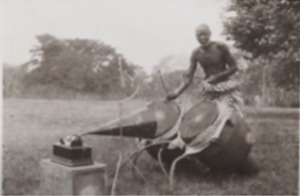
The Urban Griot Playground (UGP) is an ongoing design-based research initiative exploring how rhythm, music, and movement can enhance early literacy and STEAM skills for children ages 3–6. Originally developed as a technology-driven family workshop series, UGP continues to evolve through iterative cycles of design, testing, and refinement.
Initially developed to support at-home learning through embodied, multimodal activities, the kit has since evolved into a foundational tool for implementing the UGP curriculum across diverse contexts—the kit leverages multimodal learning to develop cognitive, socioemotional, and sensorimotor skills, while also supporting identity formation and family bonding.



My Role:
As the lead designer and strategist, I led the end-to-end design of the experience. facilitated co-design sessions with stakeholders to evaluate and refine the experience.
🧩 Navigating Ambiguity & Wearing Multiple Hats
As the only Research Assistant on a small, interdisciplinary team, I operated in an environment where roles and processes were undefined and priorities frequently shifted. This demanded adaptability, initiative, and a willingness to wear multiple hats—often being responsible for bridging research, design, and implementation, ensuring the alignment of product ecosystems, user-centeredness, effectiveness, and scalability.
I thrived in this ambiguity, taking initiative to create structure, define priorities, and fill gaps wherever they appeared.
In a nutshell, I was responsible for planning, conducting, and analyzing research and implementing insights towards ecosystem improvement. I also brought a more structured approach to the team by creating a documentation process and establishing task-specific roles for newly hired members. I was also responsible for creating research documents, marketing materials, design documents, process documents, wireframes, and prototypes.
I joined UGP in this phase
.jpg)
🪨 Main Challenge for UGP:
Despite growing calls for culturally responsive STEM education, most early learning tools remain Western-centric, overlooking the embodied, communal, and multimodal ways of learning prevalent in Black, Brown, and Indigenous communities. The UGP project aimed to bridge this gap by designing an early childhood learning kit—rooted in African drumming traditions and multimodal pedagogy—that fosters cognitive, literacy, and social-emotional development for children ages 3–6.
So, how do you make sure a learning kit is truly inclusive, joyful, and easy to use? You don’t do it alone. You bring in the voices of students, teachers, and community members. You listen, you test, and you redesign.
Method:
In order to evaluate Key elements and ecosystem of the kit, we conducted co-design sessions with design students, educators, and researchers.
_edited.jpg)
In order to evaluate key elements, the ecosystem of the kit (physical & digital), and friction points, we conducted co-design sessions with design students, educators, and researchers.
If they can’t understand the kit, then end users (parents and children) likely won’t either, using this as a benchmark for clarity and usability
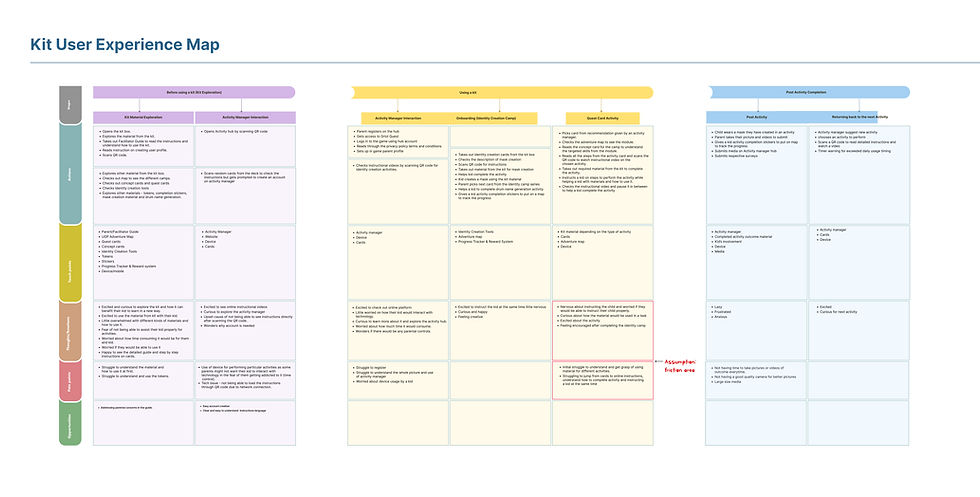

Based on the Kit User Experience Map that I initially created, we identified potential friction points like onboarding and the initial struggle to figure out how to use the kit and wanted to test whether our assumptions were true.
Process:
Being a part of a small team, I took on a broad spectrum of responsibilities and played a central role in driving the project forward. Working closely with my professor and collaborating across disciplines, I contributed to the project’s success in the following ways:


Goals of co-design sessions:
-
Stakeholder Mapping: Who will use the kit? What do they need?
-
Kit Exploration: Effectiveness of kit elements: Quest cards, concept cards, drum tokens, masks, and camp map
-
Playtesting: Participants tried activities as both “kids” and “parents” to evaluate experience
-
Feedback: Focus groups, Surveys, Observational notes

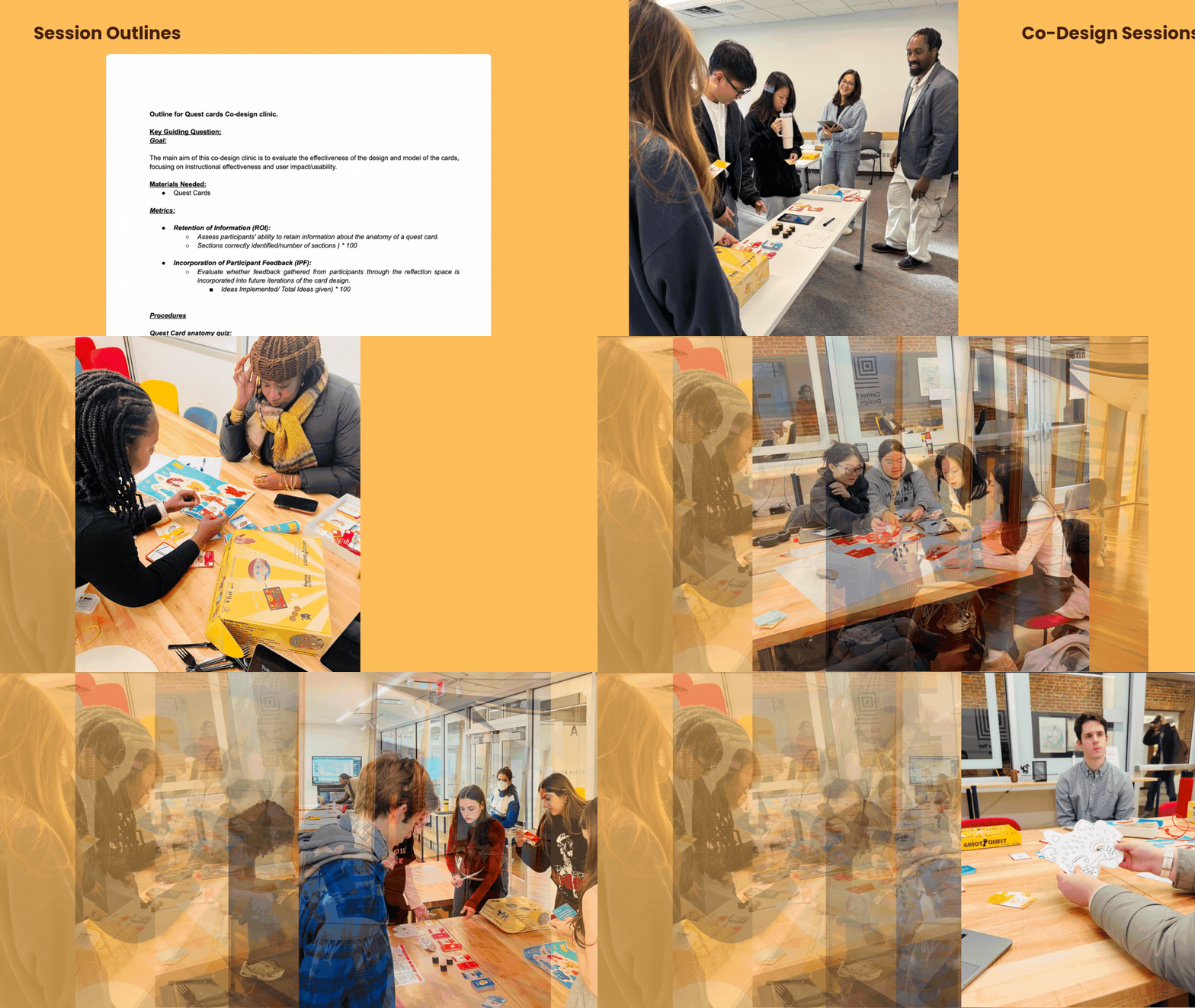
🖍️ 🗒️ Co-Design Session Planning & Facilitation
-
Developed detailed session outlines.
-
In a collaborative team effort, I facilitated 5 co-design workshops to evaluate different elements from the kit with design students, educators, and researchers to gather actionable feedback and synthesize stakeholder input into improving the kit elements and determining action items.
🖍️ 🗒️ Analyzing Data & Creating Supporting Material for Future Research...
-
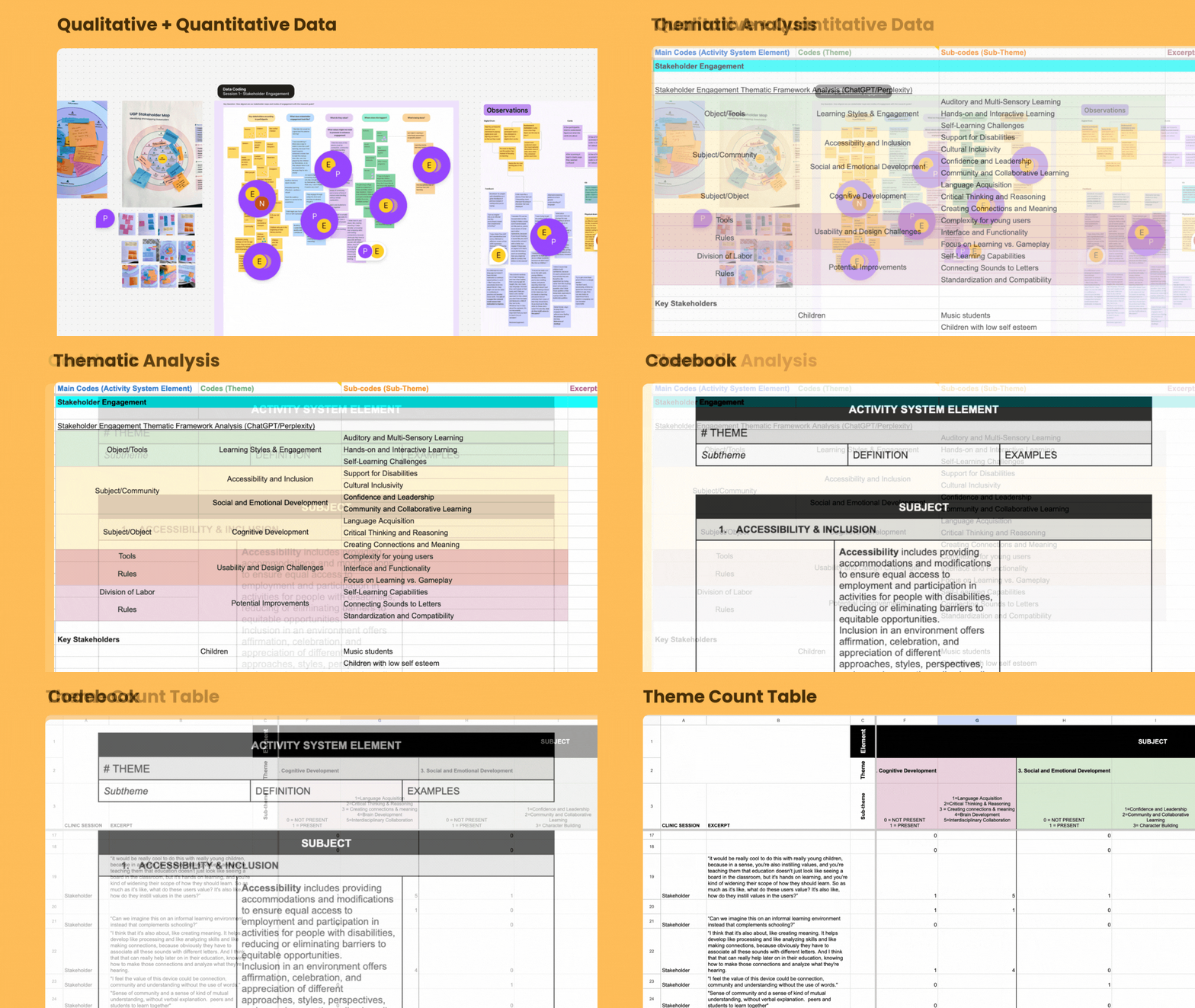
Analyzed qualitative and quantitative data from sessions and surveys to evaluate the learning kit’s design and impact.
-
Created a comprehensive codebook with clear definitions and examples, enabling consistent, rigorous analysis across the research team.
-
Developed a theme count table to track recurring patterns, informing future co-design sessions and product improvements.
Result:
-
Improved research rigor, team alignment, and the ability to measure and respond to user needs systematically.
-
Based on thematic analysis, the list of action items was created in order to Improve the design of the kit

What Did We Find Out from the Co-Design Sessions data?
The co-design sessions revealed that the UGP kit’s greatest strengths lie in its cultural grounding, multisensory engagement, and potential to build confidence and community.
At the same time, the process surfaced real challenges around instructional clarity and onboarding, leading to targeted improvements—such as visual guides, video tutorials, and facilitator resources—that made the kit more accessible and effective for all users.
“Without a walkthrough, I’d be lost. Step-by-step visuals or a quick video would help.”
“A huge amount of history and culture is rooted in this practice… that is the most valuable thing to be teaching.”
“We’re kind of confused on the concept of the tokens… we loved the tactile feel, but it was just kind of confusing to us. We don't know what to really do with it.”
Outcomes:
1. Stakeholder Map
-
Revised stakeholder map: Grouped stakeholders in two groups (Internal: Direct Impact & External: Indirect Impact) based on the kind of impact they have on the product ecosystem.
_edited.jpg)
2. Instructional Tutorial Video + QR code of Video in the kit
-
Created an instructional tutorial video for parents on how to use the learning kit
-
Added QR code in a kit for parents to scan and watch the video

“Without a walkthrough, I’d be lost. Step-by-step visuals or a quick video would help.”

3. Token Usage Integration in onboarding
-
Activities in the kit are primarily based on three pitches—high (slap), medium (tone), and low (bass)—as the core of this kit is embodied learning and rhythm
-
The majority of participants were not able to understand the role of tokens, which represent these three pitches
-
In order educate parents before getting into actual kit, we integrated the introduction of rhythm tokens and related activity demo in the onboarding flow

“We’re kind of confused on the concept of the tokens… we loved the tactile feel, but it was just kind of confusing to us. We don't know what to really do with it.”

4. Introducing stickers to track completed activities
-
In the Griot Quest kit, there are 6 camps to target different STEM skills. The physical map represents those camps
-
There was no other purpose of the camp's map; I saw this as an opportunity to enhance the play experience. Hence, I introduced the new reusable stickers in order to track each camp's completed activities & sense of play
What's the use of the camp map apart from showing camps? Does it track activities in any way?


📈 Project Status:
The UGP Learning Kit remains part of an ongoing research initiative. Since my involvement in the early design phase, the project has continued to evolve through iterative refinement and strategic planning.
My work set the foundation for a clear process for
co-design sessions, data analysis, and research documentation that could be used for clear and measurable outcomes.
Building on this foundation, the UGP team is now focused on expanding partnerships with daycare centers and early learning providers to implement the kit in real-world settings and begin the formal research phase. It's also now taking steps towards becoming a startup.
Other Wins & Impact:
In addition to co-design sessions and research, I played a pivotal role in shaping the foundational processes and supporting structures that have fueled the Urban Griot Playground (UGP) project’s overall growth. My involvement extended well beyond data collection and analysis—I helped establish efficient systems, enhanced communication, and built digital frameworks to enable sustainable progress, clarity, and engagement across the entire project team and with external stakeholders.
Here is an overview of some of my key wins:
1. Process Optimization
Challenge:
As the project grew in complexity, our team faced increasing confusion around feature tracking, implementation priorities, and development timelines. Without a central reference, conversations often repeated and decision-making stalled, leading to unnecessary iterations and lost time.
Solution:
I developed and rolled out a centralized information architecture document that brought together all features, their detailed specifications, and prioratization.
Result:
The team had immediate visibility into what was discussed, prioritized, and approved for implementation—dramatically reducing confusion, streamlining collaboration, and accelerating our workflow.

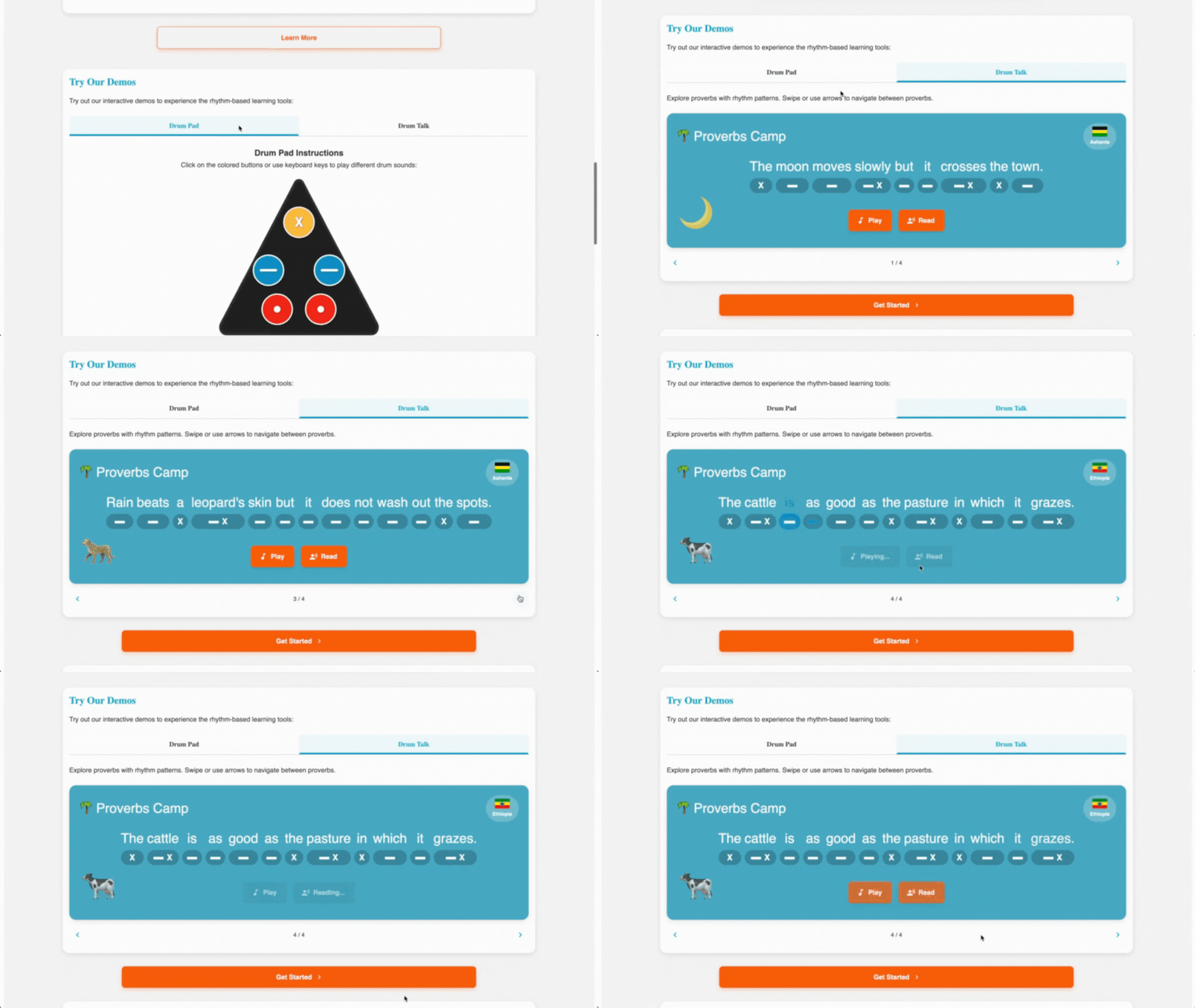
2. Activity Manager UI Design
The Activity Manager is a digital extension of the Urban Griot Playground (UGP) learning kit. Designed to seamlessly complement the physical kit, it gives families and educators a simple, interactive online platform to support children’s hands-on learning
Challenge:
Provide online activities for kids, offer parents instructional videos, enable tracking of completed activities, and allow easy upload of kids’ activity media
Solution:
To address this, I designed and developed a Minimum Viable Product (MVP) for the Activity Manager’s user interface that faithfully mirrored the look and feel of the physical kit.
Result:
Set up a strong digital foundation for direct, future co-design with families and kids.
Accelerated iterative development by giving stakeholders a working prototype to test and improve.
Created a cohesive, recognizable UI that strengthens the physical-digital link.



3. Communication & Stakeholder Engagement
Challenge:
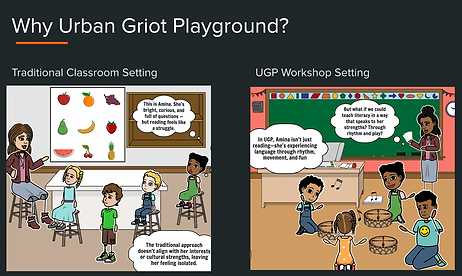
At the start, our project’s communications leaned heavily on academic jargon and dense research language, making it difficult for parents, educators, and community members to see the value or practical benefits of the kit. As a result, non-technical stakeholders struggled to connect with our presentations, which led to confusion, limited engagement, and lower pilot sign-ups than hoped.
Solution:
Translated complex research findings into simple language and visually engaging materials for non-technical stakeholders.
Result:
Improved understanding and buy-in among parents, educators, and community partners, contributing to a 40% increase in pilot sign-ups.
Notably, I shifted the project’s outward messaging away from technical jargon—making the value, meaning, and purpose relatable to our core users instead of just researchers.

3. Workflow Improvement:
Challenge:
As our project and team grew, responsibilities often overlapped, and people were assigned work that didn’t match their strengths or skills.
Without clear role alignment, accountability slipped and efficiency suffered.
Solution:
I noticed this bottleneck, and I worked closely with the professor to clarify and redefine each team member’s role, assigning responsibilities based on individual strengths and expertise. This ensured that tasks such as design, development, and research were assigned to the right people.
Result:
Boosted efficiency, streamlined collaboration, and improved overall accountability within the team.


Conclusion & Personal Reflections:
What This Experience Means to Me:
-
This project taught me the power of truly listening and co-creating with users, not just designing for them.
-
I learned how to turn real feedback and cultural insight into hands-on changes that made a difference for families and kids.
-
Leading through uncertainty and building systems from scratch gave me confidence and agility I’ll bring to any team.
My Biggest Lessons:
-
Listening is everything. The most innovative solutions come when you let users lead.
-
Flexibility matters—as much as planning. When priorities shifted, I adapted quickly and kept our goals in focus.
-
True inclusion isn’t just a goal—it’s the difference between a product that works and a product that truly matters.

